


The UN High Commissioner for Refugees appealed on Thursday for more solutions to address forced displacement in his final address to the General Assembly.
Hopes for a peaceful future in post-war Syria are at risk as funding for basic services dries up, the World Health Organization (WHO) said on Tuesday.
More details continued to emerge on Friday of atrocities committed during and after the fall of El Fasher to the Rapid Support Forces (RSF) militia in Sudans Darfur region.
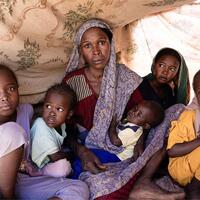
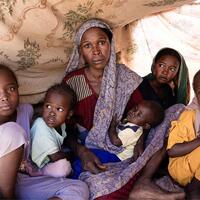
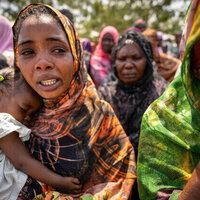
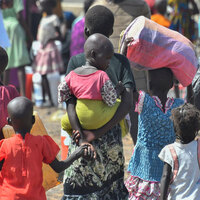
Filippo Grandireported that for the first time innearly adecade,the number of refugees and other people fleeing war,violenceandpersecution,has decreased from 123 million at the end of 2024 to about 117 million today.
This may seem surprising. Because the world has not become safer on the contrary, he said, pointing to conflicts in places such as Sudan, Gaza,Ukraineand Myanmar.
Voluntary returncrucial
The unexpected decrease haslargely beendriven by returnsto places of origin,mainlySyriaand Afghanistan. Most were voluntary, despite continued fragility in these locations.
The voluntary nature of returns is an important distinction which statistics cannot always capture, as the decrease in the total number of forcibly displaced people also accounts unfortunately for returns that were not voluntary, saidMr. Grandi.
The return of displaced Syrians illustrates very clearly the dynamic of voluntariness,he told ambassadors.
More than a million refugees have comebacksince the fall of the Assad regime in December 2024, while some two million people insideSyriahavereturned to communities of origin.
Greater support for Syria
Mr. Grandi stressed the need to support Syria, where teams fromhis refugee agency,UNHCR, are on the ground providing cashassistance, shelter rehabilitation,documentationand other services to meet immediate needs.
But much more is needed, he said.The international community, and especially donors in the Gulf region and Europe and the international financial institutions, must step up their support in building infrastructure, restoring services, reforming the security sector, restarting the economy.
Forced returns to Afghanistan
The situation of Afghans,particularlythose forcedto returnfrom Iran and Pakistan, has been the other driver of lower displacementfigures.
The two countries have hosted Afghan refugees for decades, who receivedaccess to servicespractically on par with nationals.Furthermore,generations ofthese refugees, especiallywomen,were educated inlocal schools.
But the recent waves of forced returns to Afghanistan deny many Afghan refugees the protection they need, forcing them back to an environment where human rights violations and discrimination are widespread - especially against women, he remarked.
Protection and opportunities
Mr. Grandi explained thatforced displacementis acomplex phenomenon as people may flee a country at the same time as others return toit, which isthe casein both Sudan and South Sudan.
Response is also a complex challenge,however the solution does not lie in restrictions, barriers and pushbacks.
He suggested that it is more strategic to look at entire displacement routes and identify measures that provide protection and opportunities to people on the move, andtheir hosts, as early as possible before people cross several borders.
Financial shortfall
Mr. Grandi is leaving UNHCR in the coming weeksafter 10 challenging yet fascinating years.
Before concludinghis remarks,headdressed howthedrastic and sudden reductions in financingthis yearhave had an impact onthe agency andthe entire humanitarian sector.
UNHCRfaces a$1.3 billionshortfall and expects to receive less than$4 billionthis year, out of a budget of$10.6 billion.
He urged donors to help bridge the gap and make early flexible pledges for2026.