


Sudans hunger crisis has deepened further, with new UN-backed analysis confirming that famine is underway in parts of Darfur and Kordofan, where fighting and sieges have cut off entire communities from food and aid.
More details continued to emerge on Friday of atrocities committed during and after the fall of El Fasher to the Rapid Support Forces (RSF) militia in Sudans Darfur region.
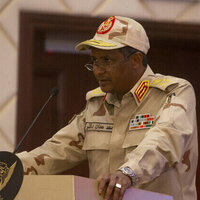
El Fasher has descended into an even darker hell, senior UN officials warned on Thursday, as the Rapid Support Forces (RSF) militia seized control of the North Darfur capital after a 500-day siege, forcing tens of thousands to flee on foot amid reports of mass executions, rape and starvation.
According to the latest IPC food security report,more than 21 million people across Sudan are facing high levels of acute food insecuritythe largest such crisis in the world.
Famine takes root
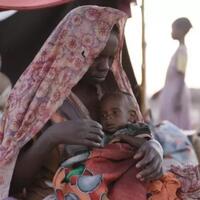
The analysis found that famine conditions are ongoing in El Fasher, North Darfur, and in Kadugli, South Kordofan, where families are trapped and surviving on leaves, animal feed and grass.
Around375,000 people nationwide are facing catastrophic levels of hunger, meaning they are on the brink of starvation.
The IPC is a global system used by UN agencies and humanitarian partners to measure the severity of hunger:.
It classifies food crises on a five-point scale, with Phase 5 famine representing extreme deprivation marked by starvation, acute malnutrition and rising deaths.
The latest findings for Sudan were reviewed and confirmed by the IPCs independent Famine Review Committee.
El Fasher turning point
Conditions for civilians remain desperate. Following the Rapid Support Forces (RSF)militias takeover of El Fasher last week after more than 500 days of siege, the UN says hundreds of civilians including humanitarian workers have been killed, and many others are trapped behind barricades.
The city remains sealed off, with food, medicine and relief supplies blocked despite urgent appeals for access.
The UNs humanitarian office,OCHA, has called this obstruction unacceptable and urged immediate, safe passage for aid convoys.
Nearly 71,000 people have fled El Fasher and surrounding areas since late October, according to the International Organization for Migration (IOM), many reporting killings, abductions and sexual violence along the way.
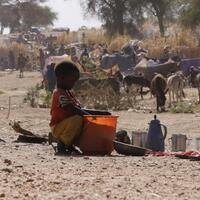
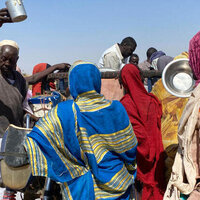
Conditions in Tawila around 70 kilometres away, where most have sought refuge, are dire: families are sleeping in the open, food stocks are depleted, and clean water is scarce.
In neighbouring Kordofan, violence has surged in recent days, driving tens of thousands from their homes.
Childrens agency,UNICEF, reported that missile strikes in Kadugli last Friday killed at least eight children sheltering in displacement sites.
Catastrophe for civilians
The UNs Humanitarian Coordinator in Sudan, Denise Brown, described the situation ascatastrophic for civilians who are caught between frontlines, cut off from assistance and facing hunger on a massive scale.
She again urged an immediate ceasefire, protection of civilians, and unimpeded humanitarian access.
With only 28 per cent of Sudans $4.16 billion humanitarian plan funded so far this year amid an unprecedented fall off in aid expenditure by donor governments worldwide the UN warned that critical life-saving operations remain at risk.
Without a halt to the fighting and a massive scale-up of aid, millions more could face starvation in the months ahead.