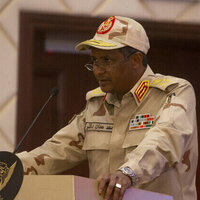



THE HAGUE, Netherlands (CN) - Reports of mass killings and sexual violence in Sudan's war-scarred city of El-Fasher have drawn scrutiny from the International Criminal Court, whose prosecutor warned Monday that attacks by the Rapid Support Forces could amount to war crimes and crimes against humanity.
In its statement, the prosecutor's office said, "These atrocities are part of a broader pattern of violence that has afflicted the entire Darfur region since April 2023," pointing to a wave of brutality that has engulfed communities across western Sudan for more than two years. The office said it is "taking immediate steps regarding the alleged crimes in El-Fasher to preserve and collect relevant evidence for its use in future prosecutions."
The office highlighted the recent conviction of Janjaweed leader Ali Muhammad Ali Abd-Al-Rahman, known as Ali Kushayb - a case the court said stands as proof that justice for Darfur's crimes is still possible.
"The office calls upon all individuals and organizations engaged in the pursuit of justice and accountability to submit, through the secure OTP Link platform, any information or evidence related to recent and prior events in El-Fasher," officials wrote.
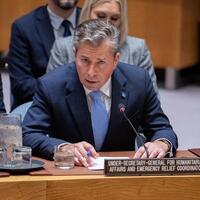
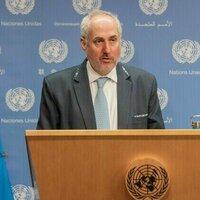
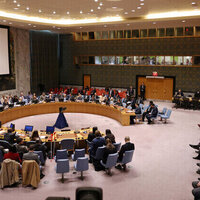
The warning comes as Sudan descends deeper into one of the worst crises in its modern history. The ICC's recent report to the United Nations Security Council describes the country as facing "one of the largest, most dire humanitarian crises ever recorded," with fighting between the Sudanese Armed Forces and the RSF showing "no end in sight to the nightmare for the Sudanese people."
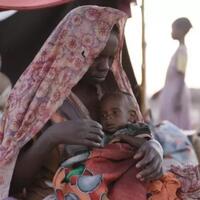
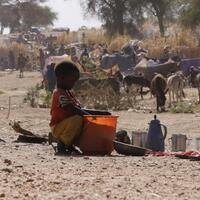
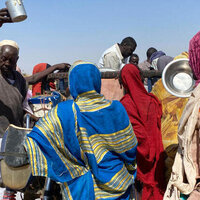
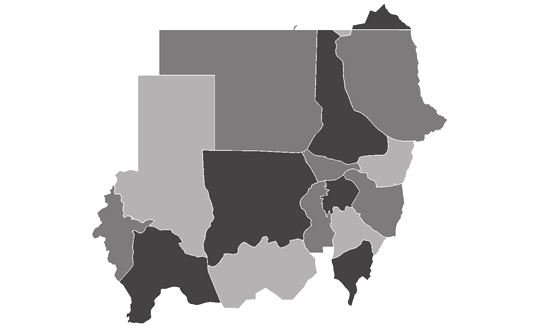
Across North and South Darfur, airstrikes and shelling have torn through towns and displacement camps where families uprooted by earlier wars had sought safety. Entire communities have been wiped out, hunger is spreading fast and aid groups warn that famine is approaching. U.N. investigators have described the situation as nothing short of a breakdown of humanity.
Darfur, once the epicenter of a brutal conflict in the early 2000s, has again been pulled into war. The latest fighting began in April 2023, when the Sudanese Armed Forces and the paramilitary RSF - once partners in Sudan's transitional government - turned their weapons on each other.
The RSF traces its roots to the Arab militias known as the Janjaweed, which fought rebel groups from Darfur's non-Arab communities that rose up against decades of political and economic marginalization by Khartoum. Over time, the force grew into a powerful organization with its own leadership, funding networks and foreign backers, later absorbed into Sudan's official security structure.
After the 2019 uprising that toppled longtime ruler Omar al-Bashir, the RSF and the army briefly shared power in a transitional council meant to lead Sudan toward democracy.
But the fragile alliance collapsed over disputes about integrating the RSF into the national army - a political fault line that quickly reignited old ethnic and regional divisions. In Darfur, where resentment over land and exclusion never fully faded, those tensions exploded with devastating consequences.
The ICC's authority to act in Darfur dates back to a landmark 2005 referral by the United Nations Security Council, which allowed the court to investigate atrocities from the earlier conflict. That probe led to charges against Bashir and several Janjaweed commanders accused of organizing mass killings and attacks on civilians two decades ago.
Now working under severe security constraints, investigators are once again gathering evidence of widespread violence. With much of Darfur inaccessible, they have turned their focus to refugee camps across the border, where survivors have shared accounts of killings, looting, assaults on displacement sites and sexual violence.
In areas still within reach, the violence has only intensified. El-Fasher, the capital of North Darfur, has become the latest epicenter, and the ICC said it was particularly concerned by large-scale assaults earlier this year on Zamzam camp just south of the city, one of the region's oldest settlements for displaced families and home to many survivors of the 2003 to 2004 atrocities. Prosecutors are now working to secure potential evidence from the area for future cases.
What happens next will hinge on whether investigators can transform the growing body of testimony and documentation into solid prosecutions amid Sudan's ongoing turmoil. Several Darfur cases, including those against former President Bashir and other senior officials, remain stalled while the suspects remain at large.
For now, prosecutors continue to track new atrocities in El-Fasher and across Darfur, building the record that could one day form the basis of future trials.
Courthouse News reporter Eunseo Hong is based in the Netherlands.
Source: Courthouse News Service