


(Note: Due to the financial liquidity crisis affecting the United Nations and the resulting constraints, the full press release will be published at a later time.)
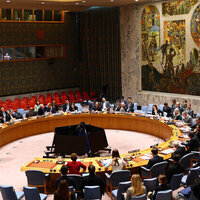
Detailing the judicial activities of the International Court of Justice over the past year, its President described to the General Assembly today how the principal judicial organ of the United Nations contributes to the Organization’s objectives as it continues to advise and adjudicate on issues of global importance.
“I should like to begin with the two advisory opinions requested by your Assembly,” said Iwasawa Yuji, President of the International Court of Justice. The Court rendered the first, concerning States’ obligations with respect to climate change, on 23 July 2025. Followed closely by the international community, the Court considered two issues: (1) States’ obligation under international law to protect the environment from anthropogenic greenhouse-gas emissions; and (2) the legal consequences for States where they, by act or omission, have caused significant environmental harm.
On the first, the Court held that climate-change treaties — namely, the United Nations Framework Convention on Climate Change, the Kyoto Protocol and the Paris Agreement — set forth binding obligations for States to ensure protection of the environment from anthropogenic emissions. “It added that these obligations are stringent,” he noted. And, on the second issue, he said that the Court — as a general observation — noted that breaches of States’ obligations “might give rise to the entire panoply of legal consequences provided for under the law of State responsibility”.
Further, he said the Court concluded that these issues represent more than a legal problem — “they concern an existential problem of planetary proportions”. The Court emphasized, he added, that international law has an “important, but ultimately limited, role in resolving this problem — a lasting and satisfactory solution requires human will and wisdom”.
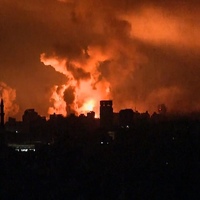
Turning to the second advisory opinion — delivered on 22 October 2025 — he said that the Court considered Israel’s obligations as an occupying Power and UN Member State regarding UN presence and activities in and related to the Occupied Palestinian Territory. “Given the circumstances on the ground, the Court paid particular attention to Israel’s obligations in the Gaza Strip,” he noted. The Court observed that, since 7 October 2023, Israel’s effective control over the Strip had increased significantly. “Therefore, the Court found that Israel’s obligations under the law of occupation had also increased significantly,” he reported.
The Court, he said, also found that the local population in Gaza has been inadequately supplied and that Israel, as the occupying Power, is obliged to “facilitate relief schemes provided by the United Nations, including UNRWA [United Nations Relief and Works Agency for Palestine Refugees in the Near East]”. Additionally, the Court held that Israel is prohibited from restricting the presence and activities of the UN, other international organizations and third States “to a degree that created conditions of life that would force the population to leave”, he said — nor can it use starvation as a method of warfare.
The Court also noted that, to the extent the local population has been capable of enjoying human rights, this has been largely enabled and ensured through UN efforts — particularly through UNRWA. The Court therefore held, he recalled, that “any diminution by Israel of the capacity of these entities to ensure these basic human rights meant that the obligations of Israel to protect these rights increase to a commensurate degree”.
Progress on Armenia-Azerbaijan, Guyana-Venezuela, Other Rulings
Turning to the Court’s other rulings during the review period, he detailed two parallel cases involving Armenia and Azerbaijan, both of which will continue to the merits following the Court’s rejection of certain objections raised by each country in the context of the case brought by the other. Another concerned land and maritime delimitations involving Gabon and Equatorial Guinea.
He further outlined four substantive orders issued by the Court: that Venezuela must refrain from conducting elections in disputed territory currently administered by Guyana; that the Court “manifestly lacked jurisdiction” to hear a case brought by Sudan against the United Arab Emirates; that four States’ interventions concerning the construction of Genocide Convention provisions are admissible in a case between The Gambia and Myanmar; and that Equatorial Guinea did not demonstrate that it possessed a plausible right to the return of certain property confiscated by France.
Also sharing the “latest developments in the asbestos-related situation in the Peace Palace” and thanking the Assembly for its “favourable response” to the Court’s 2025 budget request, he said that the Court’s ask for 2026 seeks to build on progress made by envisioning a small increase. He concluded: “The Court trusts that Member States will give their backing to these carefully reasoned requests.”
...
Complete Live Blog coverage of today's meeting can be found here .