

The Strait of Hormuz,which linksDubai to Port Sudan on the eastern coast ofAfrica,is a vital transit point for the delivery of medicines tothe continent.
But this key waterway has been effectively blocked by Iran in retaliation toUS-Israeli strikeswhich began on 28 February, with only a limited number of ships allowed through.
In recent weeks, goods have had to be diverted via the Cape of Good Hope and once they reach the West African coast, they are transported by road.
"For the fewshipsthatarestillsailing,thisdetourcomesat averyhighcost," explains RodrigueAlitanou, a doctor and directorofoperationsat the Dakar-basedNGOAlimawhich provides emergency care in 13 countries in Africa.
"Itaddsmorethan2,000 to thecostofeachcontainer.Sothishas an impact notonlyonourdeliverydelays, butalsoon thenumberofbeneficiarieswecantreat," he told RFI.
Fuel prices
Another source of pressure on the NGOs financial resources is the rise infuelprices due to worldwide shortages.
"Today, the price of alitreof petrol has risen by 40percentonaverage across the countries where we operate," saysAlitanou.
The maritime passages with a chokehold on the global economy
As aresult, theoverallcostofhumanitarianoperationshasrisen, asisthe case inSudan, forexample.
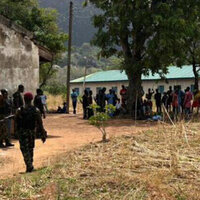
"Today, the cost has almost tripled for every lorry that reaches us," laments Haruna Tarfa, the NGOs medical coordinator in Tawila, NorthDarfur, where more than 630,000 displaced people live.
"In thecomingdays,weriskrunning out ofmaternalkits andgeneralmedicines. Thisalsoaffects themalnourishedchildrenwearetreatingwhoneedmedication."
'Accessibility is already a challenge'
Sudan is one of the crisis zones where logistical difficulties are exacerbated by the international context.
"In North Darfur, accessibility is already a challenge," explains Tarfa.
"We have very limited options when it comes to getting medicines to people. With the current events, the impact will be such that it will be very difficult for us to adapt."
Sudan conflict worsening with mass killings and famine, HRW warns
The same fear is being expressed inMali, where the NGO has already had to scale back its activities.
With the embargo on fuel imports imposedby the JNIMjihadists, "dozens of villages no longer have access to healthcare because we can no longer get around," explainsAlitanou.
If the international situation does not improve within the next three months, the NGO says it will be forcedto scale back its activities significantly.
According to a report released on Saturday by the African Union and the African Development Bank (AfDB), the Middle East war "presents a serious risk to Africa."
TheMiddle Eastaccounts for 15.8 percent of Africa's imports and 10.9 percent of its exports, the report noted.
Potential food disaster
"The conflict, which already has triggered a trade shock, could quickly turn into a cost-of-living crisis across Africa through higher fuel and food prices, rising shipping and insurance costs, exchange rate pressures, and tighter fiscal conditions," it added.
Mideast war presents 'serious risk' for Africa, major report warns
"The longer the conflict lasts and the more severe the disruption to shipping routes and energy and fertilizer supplies, the greater the risk of a significant growth slowdown across the continent."
Reduced deliveries of liquefied natural gas (LNG) from the Gulf will impact fertilizer production, limiting its availability during the crucial planting period up to May, it added.
Countries like Italy have called for the establishment of a "humanitarian corridor" for fertiliser and other essentials through theStrait of Hormuzto avoid a food disaster, particularly among vulnerable nations in Africa.
This article was adapted from theoriginal versionin French by RFI correspondent Pauline Le Troquier with additional reporting by AFP.
Originally published on RFI