

THE HAGUE, Netherlands (CN) - More than 20 years after the first massacres in Darfur, the International Criminal Court finally delivered its verdict.
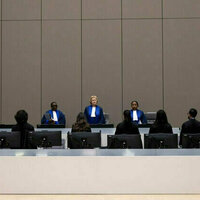
A panel of three judges found Sudanese militia leader Ali Muhammad Ali Abd-Al-Rahman - better known by his nickname Ali Kushayb - guilty of war crimes and crimes against humanity for leading brutal attacks on non-Arab villages during Sudan's counterinsurgency campaign from 2003 to 2004.
In their ruling, the judges said the evidence left no doubt that the violence was part of a larger plan. The attacks, they wrote, were not random bursts of brutality but a coordinated campaign against civilians, carried out under a state policy designed to silence and crush opposition in Darfur.
For many in Darfur, it was a moment they feared would never come. The long-awaited judgment was the first conviction by the ICC related to the Darfur conflict, and one of the most significant since the court was created in 2002 to prosecute the world's worst crimes. Inside the courtroom, a few people in the public gallery quietly wiped away tears as the judges read the verdict.
Abd-Al-Rahman, a former officer in the Sudanese Armed Forces, was accused of commanding the Janjaweed, government-backed militias made up largely of Arab fighters who became notorious for burning villages and attacking civilians in Darfur as part of a campaign to crush rebellion by non-Arab groups demanding equality.
Between August 2003 and March 2004, his fighters carried out what judges described as "armed operations against several predominantly Fur and non-Arab villages in Darfur." The ruling says villages were "pillaged and civilians were murdered, raped, persecuted, mistreated and forcibly displaced."
The man behind the Janjaweed
Born in 1949 in the South Darfur town of Rahad Al-Berdi, Abd-Al-Rahman spent much of his early life in the Sudanese army, eventually rising to the rank of warrant officer. After retiring in the 1990s, he settled in Garsila, where he ran a small pharmacy selling medicine in the local market. But when the Darfur rebellion broke out in 2003, he reemerged as a local militia leader, joining the government's so-called Emergency Plan to crush dissent across the region.
The court found that he took command of Janjaweed forces in the Wadi Salih and Mukjar areas, "exercising oversight in relation to recruitment, distribution of ammunition, weapons, supplies and salaries." Working alongside government troops, he helped lead coordinated assaults that left entire communities in ruins.
For several days in August 2003, Abd-Al-Rahman's men swept through the Darfuri towns of Kodoom and Bindisi, hunting down Fur men, torturing them and taking them outside town to be executed. Witnesses told judges how gunmen burst into homes, shot people trying to flee and set whole neighborhoods ablaze. One survivor remembered seeing men tied up and loaded onto trucks, never to return. Another said he heard gunfire echoing from the outskirts and later found the bodies of his relatives.
The same horror returned in early 2004 in the towns of Mukjar and Deleig. Men were packed into cells without food or water, beaten for days, then taken away in groups to be killed. Women told the court they were dragged from their homes and assaulted as flames consumed their villages behind them.
According to the court, none of it was random. The violence was part of a deliberate campaign to terrorize non-Arab communities accused of siding with rebels, with villages emptied, women raped and homes turned to ash as government troops and their allied militias tightened their grip on the region.
In the judges' view, Abd-Al-Rahman's part in the atrocities was neither symbolic nor secondary. He "exercised effective command and control" over his men and worked closely with Sudanese forces, turning local militias into instruments of state violence.
In the courtroom
The trial opened in April 2022 under tight security, with dozens of survivors and insiders testifying from behind protective screens. Several witnesses said they saw Abd-Al-Rahman on the ground directing assaults and ordering executions. Others remembered him sitting in meetings where government officials assured Janjaweed fighters they would never face punishment for what they did.
Prosecutors portrayed Abd-Al-Rahman as a key architect of Sudan's terror campaign, saying he helped design and direct assaults on villages alongside government troops.
All the while, Abd-Al-Rahman insisted he was innocent. His lawyers argued that the ICC had no authority over Sudan's internal conflict and that the violence in Darfur was not his doing. They claimed prosecutors had mistaken him for someone else and failed to prove that he ever held a leadership position.
Defense lawyers argued that Sudan's laws at the time didn't clearly define war crimes or crimes against humanity, saying their client couldn't have predicted facing prosecution for actions taken amid a civil war. They also claimed the Janjaweed's actions were justified under ghanima, a concept from Islamic law that they said allowed fighters to take property as spoils of war, and insisted the militias were simply following government orders.
The judges rejected each argument in turn, noting that Sudan's 1991 Criminal Act and 1998 Constitution already outlawed murder, torture, rape, destruction of property and armed robbery. Those laws, the judges said, were clear enough that any reasonable person in Abd-Al-Rahman's position would have known such acts were crimes.
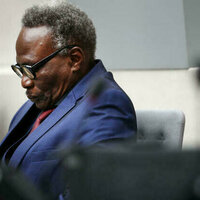
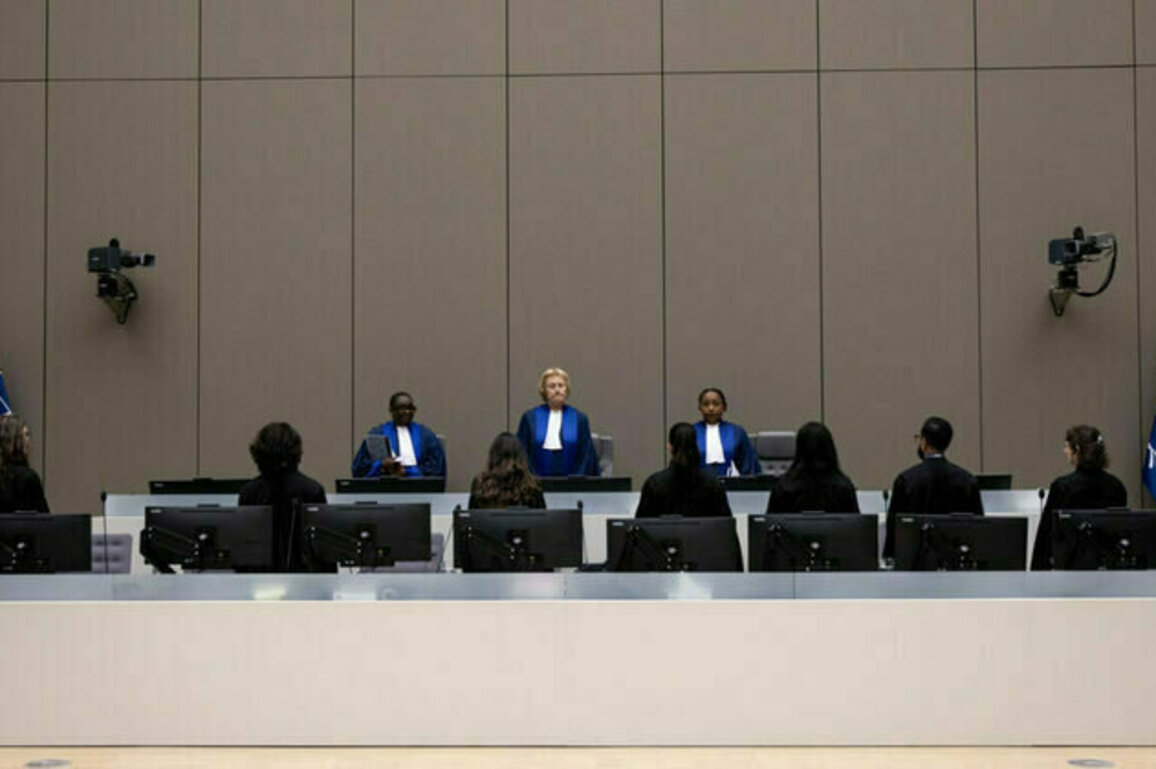
When the judges delivered the verdict on Monday, Abd-Al-Rahman sat still in the dock, his face blank as the presiding judge read the findings. He kept his hands clasped and his eyes fixed forward, showing no visible reaction while the list of convictions was read.
A reckoning long delayed
The court found Abd-Al-Rahman guilty on 31 counts of war crimes and crimes against humanity, including murder, persecution, torture, rape and the forced displacement of civilians. The three-judge panel reached the decision unanimously. But they declined to convict him on two charges related to recruiting child soldiers, finding the evidence too weak and inconsistent to meet the required standard of proof.
For survivors, the ruling closed a long and painful chapter. The Darfur conflict, which began when non-Arab rebels rose up against the Sudanese capital of Khartoum, left about 300,000 people dead and millions displaced. The Janjaweed militias, mounted on horses and camels, came to embody the terror that swept across Sudan.
Abd-Al-Rahman surrendered to the ICC in 2020, years after an arrest warrant was first issued. And his trial became a test of whether international justice could still deliver for Darfur after decades of waiting.
Deputy Prosecutor Nazhat Shameem Khan called the verdict "a crucial step towards closing the impunity gap in Darfur," saying it sends a clear message that justice can still reach those responsible for the region's worst atrocities. She said the ruling also honors "the bravery of many thousands of Darfuri victims, who hoped and fought for justice through the years," and reaffirmed the court's promise to keep pursuing gender-based crimes and holding perpetrators accountable.
Carsten Stahn, a professor of international criminal law at Leiden University, said the case showed both the promise and the limits of international justice. "Sometimes the wheels of justice grind slowly. The trial of Al-Rahman shows just that," he said.
Natalie von Wistinghausen, the lawyer representing victims, said the verdict brought a deep sense of justice to her clients, even as it reopened old wounds. "It gives my clients a deep sense of justice, after all this time that they have waited for accountability," she said. For many women, she added, the decision carried special weight, marking the first time the ICC found a defendant guilty of both sexual violence and gender-based persecution.
Her clients, she said, still hope others will one day face justice, even if no ruling can undo the past or heal a country still scarred by war. "The fact that the court is addressing the crimes committed in Darfur helps them to find some inner peace," she said.
Sudan remains engulfed in turmoil. The Sudanese army and the Rapid Support Forces - a paramilitary group that evolved from the Janjaweed - have been locked in a new civil war since April 2023. The fighting has displaced more than a million people, killed hundreds and triggered international sanctions, including U.S. visa bans and asset freezes imposed last year after ceasefire talks collapsed.
Under ICC procedure, the next phase will determine Abd-Al-Rahman's sentence, followed by hearings on potential reparations for victims. The judgment could also renew pressure on Sudan to cooperate with the court in the remaining Darfur cases, including that of former President Omar al-Bashir.
Courthouse News reporter Eunseo Hong is based in the Netherlands.
Source: Courthouse News Service