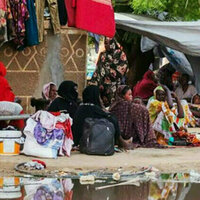


With pockets of relative safety emerging in Sudan, over 1.3 million Sudanese people including one million who were internally displaced and over 300,000 refugees have returned home, according to UN agencies.
Major cuts to aid budgets have already left people fleeing wars in Sudan and beyond without the assistance and protection they need, the UN refugee agency, UNHCR,saidon Friday.
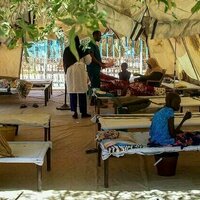
As the humanitarian crisis deepens in Sudan, the UN and partners have revised and scaled up a response plan to support more than 380,000 displaced people in Tawila, North Darfur state.
The thousands of people seeking to return home are driven by hope, resilience and an enduring connection to their country, said Othman Belbeisi,regional directorof the International Organization of Migration (IOM).
While this development does offer hope, many of these people are returning to states and cities whose resources have been devastated by over two years of war.
Since conflict broke out in April 2023, over 12 million Sudanese have been forcibly displaced, representing the largest displacement crisis in the world.
One-third of these displaced people have fled into neighbouring countries such as Chad and South Sudan, which are increasingly struggling to support the influx of refugees.
Not only do [the returnees] mark a hopeful but fragile shift, they also indicate already stretched host countries under increasing strain, said Mamadou Dian Balde, the regional coordinator for the UNs refugee agency,UNHCR.
A race against time
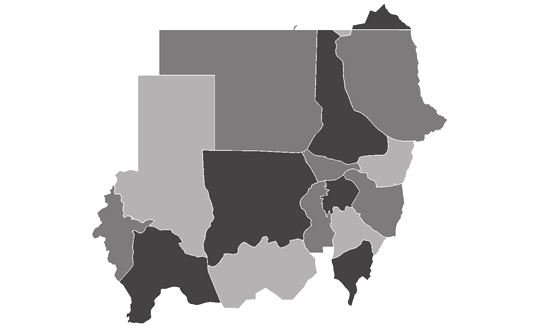
IOMemphasized that for these returns to accord with international law, they must be voluntary and dignified. Most of the 1.3 million Sudanese returnees are heading to Khartoum, Al Jazirah and Sennar states where the impact of the conflict is still very acute.
In Khartoum specifically, many buildings including theUNHCRoffice are in ruins and public infrastructure, such as roads and power plants, has been compromised or destroyed.
Without urgent action, people will be coming back to cities that are in ruins. We are in a race against time to clear the rubble and provide water, power and healthcare, said Abdallah Al Dardair,directorof the Arab States for the UN Development Programme (UNDP).
Additionally, Khartoum is already housing many internally displaced people and people who had formerly sought asylum in Sudan before the war broke out.
Returnees also face danger from unexploded ordnance and high rates of gender-based and sexual violence against women and girls. To address the psychosocial and protection needs of these women and girls, safe spaces have been set up in Khartoum and Al Jazirah states.
Key to recovery
In highlighting the hope that these returns signal, Mr. Belbeisi emphasized that returnees must be seen as active participants in the recovery of conflict-ridden Sudan.
Those heading home are not passive survivors, they are vital to Sudans recovery. Yes, the humanitarian situation is dire, but with the right support, returnees can revive local economies, restore community life, and foster hope where its needed most, he said.
However, humanitarian work in and around Sudan is drastically underfunded only 23 per cent of the estimated $4.2 billion dollars needed for the next year has been received, meaning that life-saving services may have to be scaled back.
More than evidence of peoples desire to return to their homeland, these returns are a desperate call for an end to the war so that people can come back and rebuild their lives, Mr. Balde said.