

New Delhi [India], June 4 (ANI): India's clean energy targets, including the goal of achieving 500 GW of non-fossil fuel capacity and objectives under the National Green Hydrogen Mission, could generate over 44 lakh full-time equivalent (FTE) jobs by 2030.
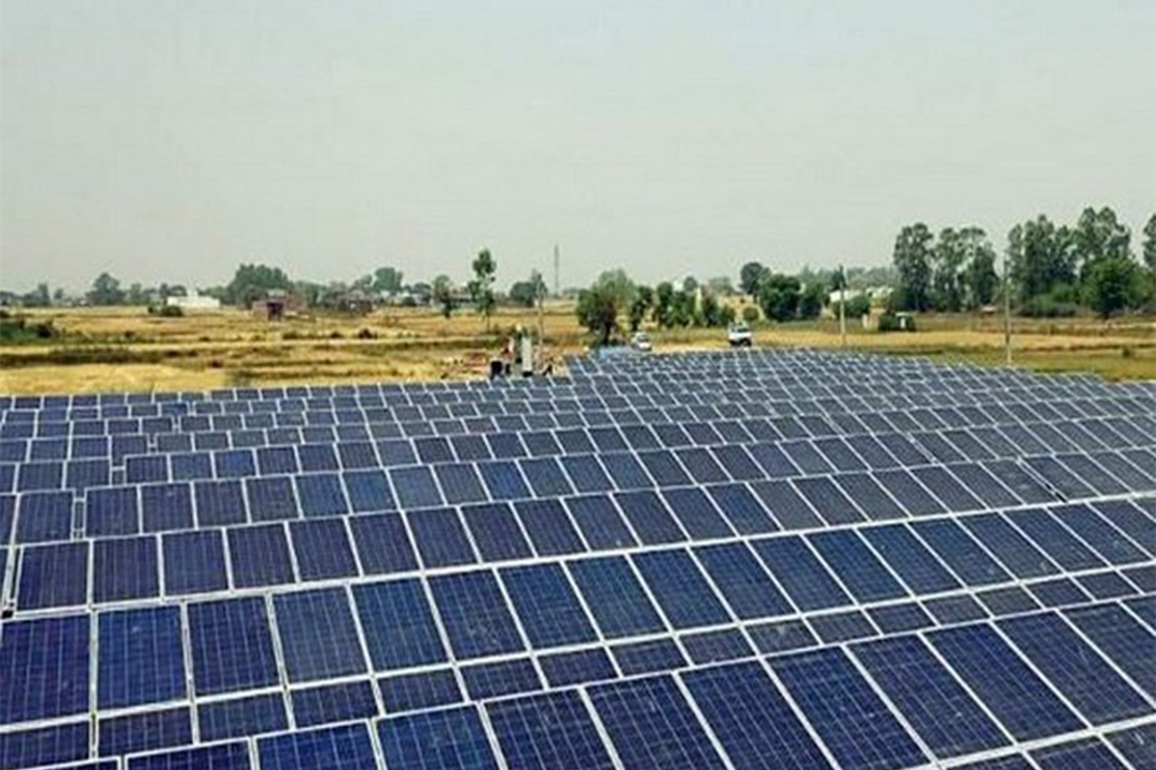
According to a new study released by the Council on Energy, Environment and Water (CEEW) and Natural Resources Defense Council (NRDC) India, rooftop solar is expected to emerge as the largest employment driver, accounting for around 43 per cent of the projected jobs.
The study, titled 'Driving Energy Transition: Workforce, Skills, and Gender in India's Renewable Energy Sector', said that rooftop solar could generate the largest share of jobs linked to India's clean energy ambitions, while select clean energy sectors have already added more than 6.5 lakh workers between FY23 and FY26. The study was conducted with technical guidance from the Ministry of New and Renewable Energy (MNRE).
Speaking about job creation prospects in the sector, MNRE Secretary Santosh Kumar Sarangi said the element of people's involvement is intrinsic to a successful green transition.
'The positive externalities involved in keeping people as the focus of this green transition is intrinsic, and India has shown that our economic growth trajectory as well as sustainability goals can be pretty well aligned,' he said.
'Last year, we achieved about 51 gigawatts of solar and wind, and hopefully, this momentum will continue and expand in the subsequent years,' he added.
The study found that rooftop solar accounted for 62 per cent of the 6.5 lakh clean energy workers added between FY23 and FY26, followed by PM-KUSUM at 16.3 per cent, biomass power at 12.6 per cent and ground-mounted solar at 6 per cent.
Explaining the employment potential of distributed renewable energy, CEEW CEO Arunabha Ghosh said India's energy transition must also be a workforce transition.
'The opportunity is about creating livelihoods, building skills, deepening domestic supply chains, and ensuring that the benefits of clean energy reach households, farmers, workers, and entrepreneurs while also adding gigawatts.'
Highlighting the role of rooftop solar, Ghosh said, 'Rooftop solar shows why distributed renewables matter: they generate clean power while creating more jobs per MW than utility-scale projects.'
The study estimated that rooftop solar generates around 45 FTE job-years per MW, compared with one FTE job-year per MW for ground-mounted solar and around 0.6 FTE job-year per MW for wind projects.
NRDC India Country Director Dipa Singh Bagai said clean energy jobs are essential to India's economic growth, energy security, and climate goals.
'This study shows that distributed renewable energy, especially rooftop solar, can create employment across cities, small towns, and rural areas.'
However, the study highlighted gender disparities in the sector. It found that women account for only 11 per cent of the workforce in solar and wind deployment and manufacturing activities, with most employed in non-technical functions such as human resources, accounting and administration.
The report also noted that nearly 13 lakh FTE jobs could be created in operations, maintenance and manufacturing roles. (ANI)